

Have you come across jojoba oil in a beauty blog, a YouTube tutorial, or your favourite skincare magazine? If you are curious about this popular natural ingredient and how it can be included in your skincare routine, this guide is for you.
Jojoba oil is widely used in skincare and cosmetic products because of its moisturising properties and lightweight texture. It can help soften the skin, support moisture retention, and make everyday skincare feel more nourishing.
In this article, we will explore where jojoba oil comes from, what makes it unique, its cosmetic benefits, and how you can use it as part of your skincare routine.
What Is Jojoba Oil?
Jojoba oil is a golden or pale-yellow liquid wax obtained from the seeds of the jojoba plant. Its scientific name is Simmondsia chinensis. Although commonly called an oil, jojoba is technically a liquid wax.
One of the reasons jojoba oil is popular in skincare is that its composition differs from that of many other plant oils. Its wax esters have similarities to some of the components found in the skin’s natural surface oils.
Jojoba oil is commonly added to facial oils, moisturisers, cleansers, body-care products, and hair-care formulations. Its smooth texture makes it useful in products designed to soften and condition the skin.
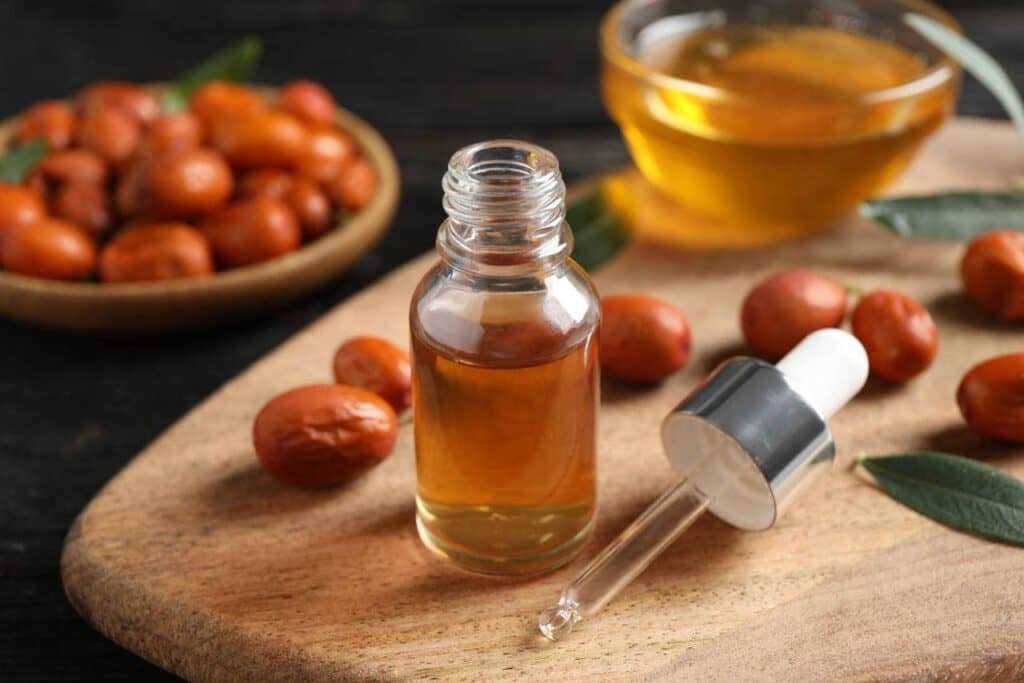
Where Does Jojoba Oil Come From?
The jojoba plant is a hardy shrub native to arid regions of the southwestern United States and northwestern Mexico. It is well suited to dry environments and produces seeds that contain the wax used to make jojoba oil.
After the seeds mature, they are collected and processed to extract the jojoba wax. Depending on the production method, the resulting ingredient may be filtered or refined before it is used in cosmetic products.
Jojoba has a long history of traditional use by Indigenous communities in the regions where the plant grows. Today, it is widely recognised as an ingredient in modern beauty and personal-care formulations.
How Does Jojoba Oil Work on the Skin?
Jojoba oil is primarily valued as an emollient. Emollients help soften the skin and improve the feel of its surface by helping to reduce moisture loss.
When applied as part of a skincare routine, jojoba oil can leave the skin feeling smoother and softer. It also helps condition the skin without the heavy texture associated with some richer oils.
However, everyone’s skin is different. The way jojoba oil feels and performs can depend on your skin type, the formulation of the product, and how much you apply.

Top Benefits of Jojoba Oil for Skin
Jojoba oil is a versatile ingredient with several cosmetic uses. Here are some of the main reasons it appears in skincare products.
1. Helps Moisturise the Skin
One of the most popular uses of jojoba oil is moisturising. As an emollient, it helps soften the skin and can support the retention of moisture.
When your skin feels dry or rough, a small amount of jojoba oil may help leave it feeling smoother and more comfortable. It can be used on its own or as part of a moisturising product.
For best results, choose a product that suits your skin and apply it according to its instructions.
2. Helps Support the Skin's Moisture Barrier
The skin’s outer layer plays an important role in retaining moisture and protecting the surface from external irritants. A suitable skincare routine can help maintain this layer.
Jojoba oil can help soften the skin and reduce moisture loss, making it a useful ingredient in products designed for dry or dehydrated-feeling skin.
It should be considered one part of a skincare routine rather than a replacement for a well-formulated moisturiser when additional hydration is needed.
3. Contains Vitamin E and Other Compounds
Jojoba oil contains naturally occurring compounds, including tocopherols, a group that includes forms of vitamin E. Vitamin E is known for its antioxidant activity.
The exact composition of jojoba oil can vary depending on the source and processing method. While these compounds contribute to the ingredient’s cosmetic interest, they should not be taken as proof that applying jojoba oil prevents skin ageing or reverses skin damage.
4. Can Be Used in Skincare for Different Skin Types
Jojoba oil is used in products formulated for a range of skin types because of its emollient properties and smooth texture.
People with dry skin may appreciate the softer feel it provides. Those with oily skin may prefer using only a small amount or choosing a lightweight product that contains jojoba oil.
However, no skincare ingredient suits everyone. If your skin is sensitive or prone to breakouts, introduce a new product gradually and stop using it if irritation occurs.
5. Helps Soften and Smooth the Skin
Jojoba oil can improve the feel of rough or dry skin by providing a soft, conditioned finish. It is often included in facial oils, body oils, creams, and lotions for this reason.
With regular use of a suitable product, the skin may feel smoother and more supple. The cosmetic effect depends on the formulation and the individual’s skin.
6. Can Be Used as a Makeup Remover
Jojoba oil can help loosen makeup and other oil-based residue from the skin. This makes it a useful ingredient in some cleansing oils and makeup-removal products.
To remove makeup, follow the directions provided with your cleansing product. If you use pure jojoba oil, apply a small amount gently and avoid getting it into your eyes. Remove any remaining residue with a suitable cleanser if needed.
A gentle approach is important, especially when removing makeup around the eyes or working with sensitive skin.
Precautions Before Using Jojoba Oil
Although jojoba oil is commonly used in cosmetic products, it may not suit everyone.
Choose a product intended for your skin, check its ingredients, and follow the directions on the label. Avoid applying it to irritated or damaged skin unless advised by an appropriate healthcare professional.
Stop using the product if you experience redness, itching, swelling, or discomfort. Keep it away from your eyes and store it according to the manufacturer’s instructions.
Remember that jojoba oil does not replace sunscreen, prescribed skincare treatments, or professional advice for ongoing skin concerns.